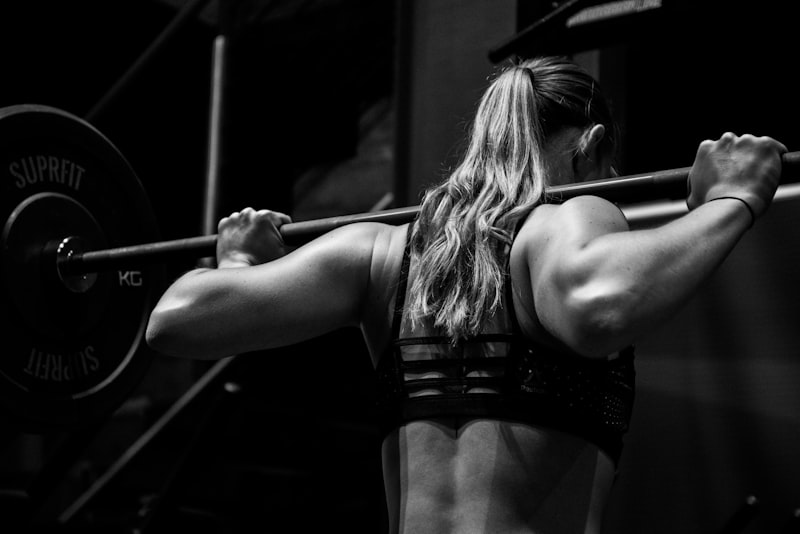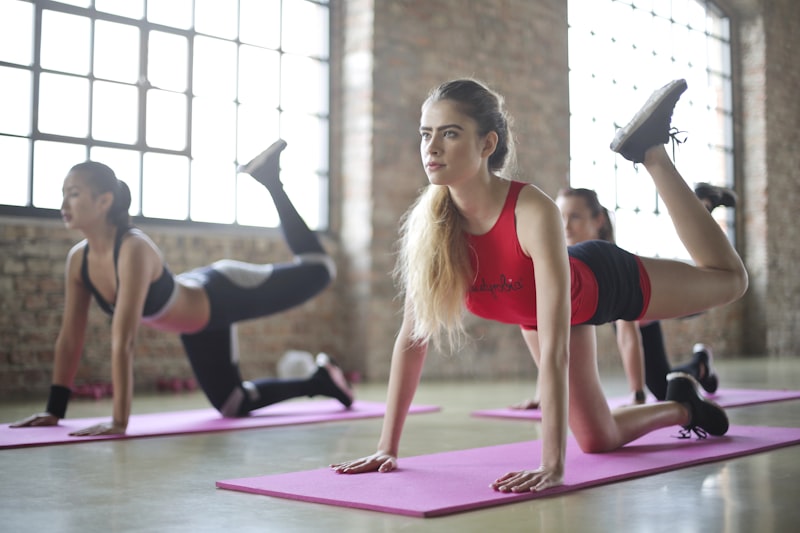
Quick Answer & Medical Summary
Have you ever walked into the gym feeling confident, only to find that the weights you easily lifted last week suddenly feel twice as heavy?
You might get out of breath on your normal warm-up jog. Your legs feel leaden, your face gets hot faster, and by the end of your session, you are completely wiped out instead of energized.
Before you start blaming yourself or thinking you lost all your fitness progress, take a breath: there is nothing wrong with your work ethic.
You are in your luteal phase—the second half of your menstrual cycle. During these two weeks, your internal chemistry completely shifts. Once you understand the simple biological reasons why your body acts differently, you can adapt your workouts to feel strong, toned, and energized all month long.
What Actually Happens to Your Body in the Luteal Phase?
To understand why your training needs to shift, look at what your two main reproductive hormones—estrogen and progesterone—are doing:
- Progesterone takes center stage: After ovulation, progesterone surges to prepare the lining of your uterus. Progesterone is naturally calming, but it also raises your basal body temperature by about half a degree to a full degree Fahrenheit. That tiny temperature increase means your body works harder to cool itself down, making workouts feel hotter and sweatier.
- Resting heart rate climbs: You might notice your smartwatch showing a resting heart rate that is 5 to 10 beats per minute higher than normal. Your heart is already pumping a little faster before you even pick up a dumbbell.
- Slower glycogen release: In the first half of your cycle (the follicular phase), high estrogen helps your muscles store and use quick-burning carbohydrates (glycogen). In the luteal phase, progesterone shifts your body to use fat and protein for fuel, which takes longer to convert into explosive energy.
- Ligaments loosen slightly: A hormone called relaxin increases after ovulation. This relaxes your pelvic joints and ligaments, which means your stabilizer muscles need to work harder to keep your joints secure during quick, jerky movements.
[ HOW YOUR HORMONES SHIFT YOUR WORKOUT CAPACITY ]

FOLLICULAR & OVULATORY (Days 1–14)        LUTEAL PHASE (Days 15–28)
──────────────────────────────────        ───────────────────────────────
• Estrogen is high                       • Progesterone is high
• Fast muscle recovery                   • Higher body temperature (+0.5–1°F)
• Great carb burning for explosive power  • Better fat burning, slower quick energy
• Peak strength & PR potential           • Needs longer rest periods between sets
• High tolerance for HIIT & sprints      • Best for controlled strength & steady cardio
Follicular Phase vs. Luteal Phase: How Your Training Compares
Here is a quick snapshot of how your workout strategy should shift between the two halves of your cycle:
| Training Element | Follicular & Ovulatory Phase | Luteal Phase (Your Sweet Spot) |
|---|---|---|
| Primary Goal | Progressive overload & personal records | Controlled strength, form mastery & hypertrophy |
| Best Intensity | High intensity (HIIT, sprints, heavy 1–5 rep maxes) | Moderate intensity (70–75% effort, 8–12 controlled reps) |
| Rest Between Sets | 45 to 60 seconds is plenty | 90 to 120 seconds to allow full heart rate recovery |
| Cardio Style | Sprint intervals, high-cadence spin classes | Incline walking, zone 2 steady-state, swimming |
| Cool-Down Focus | Quick stretching | Deep nervous system reset & restorative breathing |
The Best Luteal Phase Full-Body Workout Routine
During the luteal phase, your winning formula is compound movements done with a slow, controlled tempo. Instead of rushing through circuits, take your time, focus on mind-muscle connection, and take a full 90 seconds of rest between sets.
Here is a complete, cycle-synced routine using exercises straight from our library:
1. Barbell Hip Thrust
- Why it is great for luteal: The hip thrust keeps your spine and pelvis supported on a bench, giving you maximum glute activation without overloading your lower back.
- Sets & Reps: 3 sets of 8 to 10 reps.
- Form Tip: Pause at the top for 2 full seconds, squeezing your glutes tightly before lowering with control.
2. Romanian Deadlift (Barbell)
- Why it is great for luteal: A slow eccentric (lowering) phase builds hamstring and glute tone while teaching your hips to hinge safely, protecting loose ligaments.
- Sets & Reps: 3 sets of 10 reps.
- Form Tip: Take 3 full seconds to lower the bar just below your kneecaps, keeping your shins completely vertical.
3. Goblet Squat (Dumbbell)
- Why it is great for luteal: Holding a dumbbell at your chest naturally keeps your torso upright and your core engaged, reducing shear stress on your knees.
- Sets & Reps: 3 sets of 10 to 12 reps.
- Form Tip: Inhale on the way down, press your knees gently outward, and push the floor away through your heels.
4. Lat Pulldown
- Why it is great for luteal: Seated upper body pulling improves posture and relieves upper-back tension that often builds up when pre-period fatigue causes slouching.
- Sets & Reps: 3 sets of 10 reps.
- Form Tip: Pull your shoulder blades down into your back pockets before your elbows bend.
5. Dumbbell Chest Press
- Why it is great for luteal: Flat bench pressing with dumbbells allows your wrists and shoulders to move along their natural joint path without getting locked into a rigid barbell angle.
- Sets & Reps: 3 sets of 10 reps.
- Form Tip: Lower the dumbbells smoothly for 3 seconds until your elbows reach a 45-degree angle from your torso.
6. Dead Bug
- Why it is great for luteal: Unlike crunches that compress your abdomen and increase pelvic pressure, the dead bug stabilizes your deep transverse abdominis safely.
- Sets & Reps: 2 sets of 10 reps per side.
- Form Tip: Glue your lower back flat against the floor. If your lower back arches, do not extend your leg as low.
7. Child’s Pose
- Why it is great for luteal: A soothing 2-minute restorative finisher that opens tight hips, eases lower back compression, and signals your nervous system to wind down.
- Duration: Hold for 2 to 3 minutes with slow belly breaths.
4 Practical Tips to Maximize Your Luteal Workouts
- Eat a small carb-and-protein snack 45 minutes before: Because your body does not release stored glycogen as quickly in the luteal phase, going into a workout fasted can make you dizzy or irritable. A small banana with a spoonful of peanut butter or a slice of toast with egg works wonders.
- Double down on hydration and electrolytes: Progesterone acts as a mild natural diuretic, meaning your body flushes water and sodium out more quickly. Drink plenty of water and add a pinch of sea salt or an electrolyte packet to prevent pre-period muscle cramps and headaches.
- Turn up the rest timer: If you normally rush to the next set after 45 seconds, give yourself a full 90 to 120 seconds. Letting your heart rate return to baseline before starting your next set prevents stress hormone spikes.
- Swap the last 15 minutes of cardio for walking: If your workout plan calls for 30 minutes on the stairmaster or treadmill sprints, swap it for an incline walk outside in fresh air. You will burn just as many calories without triggering cortisol-driven sugar cravings later in the evening.
When to Rest or Lighten the Load
Always listen to your body’s daily feedback. Consider swapping your lifting session for a light walk or restorative stretching if:
- You slept poorly, woke up hot, and feel completely drained before starting.
- Your resting heart rate is more than 10 beats higher than your monthly baseline.
- You are experiencing sharp, throbbing menstrual or premenstrual cramps.
- You feel mentally irritable, overwhelmed, or resentful about exercising. A 20-minute gentle walk outdoors does far more for your hormones than forcing yourself through a punishing gym session.
For deeper insights into how training shifts over all 4 phases, check out our cycle-synced fitness guide, learn more about strength training by cycle phase, or read the 4 phases explained.
 EvaShark Biological Insight