Squat Jumps
Movement Pattern: General • Locations: Home, Gym
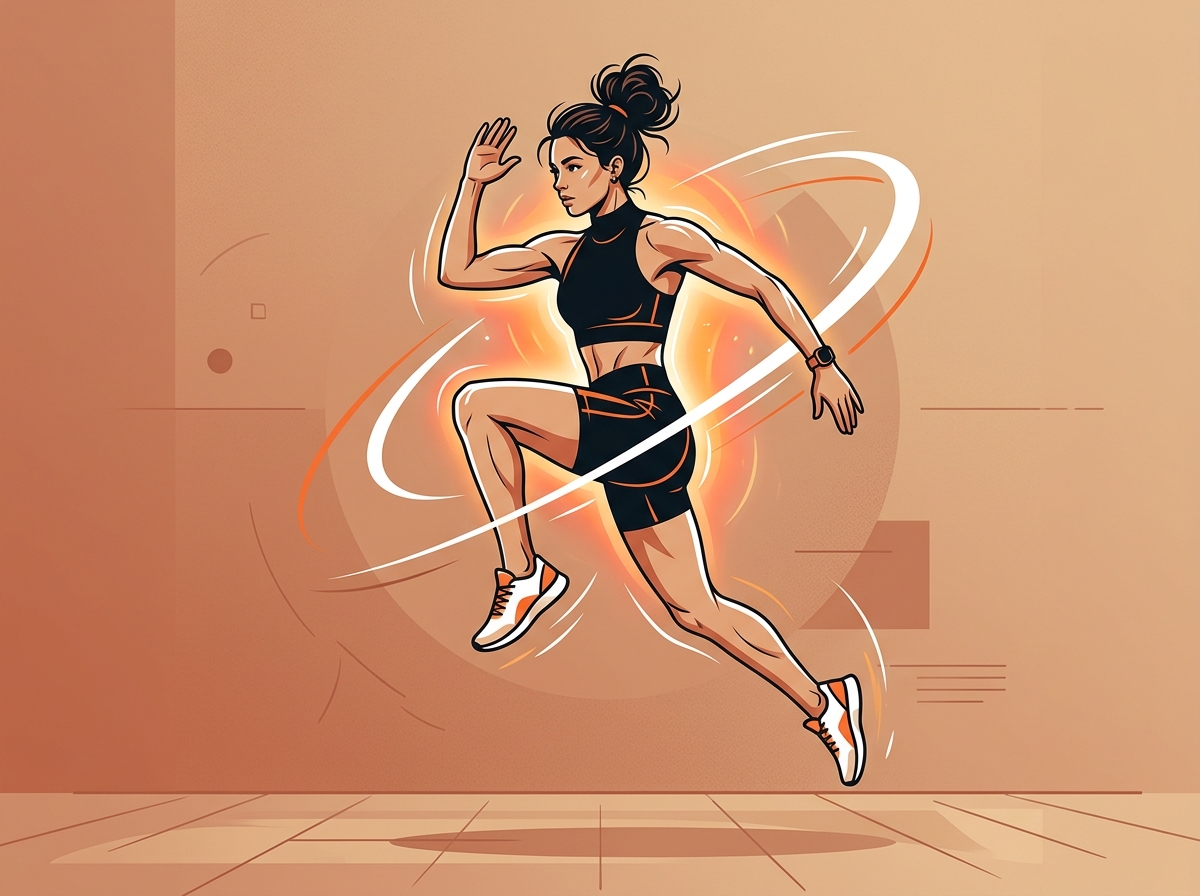
Feet shoulder-width apart, toes turned 15–30° outward. Tripod foot pressure through heels and big toes.
Female Pelvic Q-Angle Adaptation: Women naturally have a wider pelvis, increasing the inward angle on the knee joint (Q-angle). To protect ACL ligaments and activate the gluteus medius, cue knees to push actively outward in line with middle toes.
Hormonal Phase Rationale
Squat Jumps provides gentle, non-jarring active recovery that promotes pelvic and abdominal circulation without spiking systemic cortisol. During menstruation, when estrogen and progesterone are at baseline, this movement supports joint lubrication and relieves lower back tension.
“Keep tension in the working muscles.”
Controlled descent (2-0-1), explosive contraction
Inhale through your nose as you lower down; exhale forcefully through your mouth as you push the floor away or press the weight.
Target Muscles Worked
Biomechanical recruitment map for Squat Jumps
Step-by-Step Execution Guide
Follow these sequence cues for optimal kinetic chain alignment and joint safety.
- 1Focus on form and controlled movement.
- 2Breathe steadily throughout the exercise.
Common Form Mistakes to Avoid
Prevent injury and maximize muscle recruitment by catching these common technique breakdowns.
Knees caving inward (valgus collapse) on the ascent.
Actively drive your knees outward in line with your middle toes, engaging your gluteus medius.
Chest collapsing forward and rounding the thoracic spine.
Keep your collarbones wide, eyes forward, and brace your core like preparing for a light cough.
Lifting heels off the ground at the bottom.
Distribute weight evenly across the tripod foot: heel, base of big toe, base of pinky toe.
Frequently Asked Questions
Evidence-based answers regarding Squat Jumps biomechanics and hormonal timing.
What primary muscles does the Squat Jumps target?
The Squat Jumps primarily activates the Quadriceps and Glutes. It also engages secondary stabilizer muscles to build balanced, functional strength across your kinetic chain.
When in my menstrual cycle should I do Squat Jumps?
Squat Jumps is optimal during your Menstrual, Follicular, Ovulatory, Luteal phase(s). When estrogen is higher (Follicular/Ovulatory), you can push for personal records and progressive overload. In progesterone-dominant phases (Luteal/Menstrual), focus on controlled form and active recovery.
What equipment is required for Squat Jumps?
This exercise requires None. In the EvaShark mobile app, workouts adapt automatically to whether you are training at Home, in the Gym, or Outdoors.
What is the key coaching cue for proper Squat Jumps form?
The essential coaching cue is: "Keep tension in the working muscles." Focus on smooth tempo, spinal alignment, and never sacrificing form for extra repetitions.
Alternative & Complementary Exercises
Target similar kinetic chains and movement patterns in your workout split.
Recommended Cycle-Synced Guides
Deepen your understanding of female infradian training, nutrition, and hormones.
Cycle-Synced Fitness: Why Your Energy Levels Change
Stop fighting your natural cycles and start working with them to achieve peak performance through adaptive training.
Cycle Syncing • 6 min readThe 4 Phases Explained: A Guide to Your Menstrual Cycle
Understanding your body's rhythm is the first step to reclaiming your power. Learn what happens during each phase.
Lifestyle • 9 min readWhy Am I So Clumsy Before My Period? The Neurobiology of Relaxin, Dropping Things, and Luteal Brain Fog
Dropping your phone and bumping into furniture before your period? Learn how luteal relaxin loosens joint ligaments and slows proprioception by 15–20% — and how to stay grounded and safe.
Cycle Syncing • 8 min readPost-Pill Realities: Navigating Hormonal Recovery
Coming off hormonal birth control? Here is what to expect and how to properly support your body during the transition.
Ready to train Squat Jumps in your personalized cycle split?
The EvaShark mobile app calculates your daily energy, symptom logs, and hormonal phase to automatically prescribe optimal sets, reps, and deloads.